‘Bring the arts to the people’: Paul Tam’s vision for Hong Kong’s WestK
Paul Tam is the Executive Director of Performing Arts at the West Kowloon Cultural District Authority (WKCDA). In this role, he helps shape the WestK Performing Arts vision for WestK, a cultural district taking shape across 40 hectares of reclaimed land beside Victoria Harbour. He discusses WestK’s place in Hong Kong’s cultural ambitions, what artists need from its venues, and the audiences it hopes to reach.
People come to WestK for different reasons. Some have tickets for Chinese opera or an exhibition. Others walk along the waterfront, eat with friends or spend an afternoon in the park. Paul Tam hopes that a visitor who came for one reason will find another reason to return.
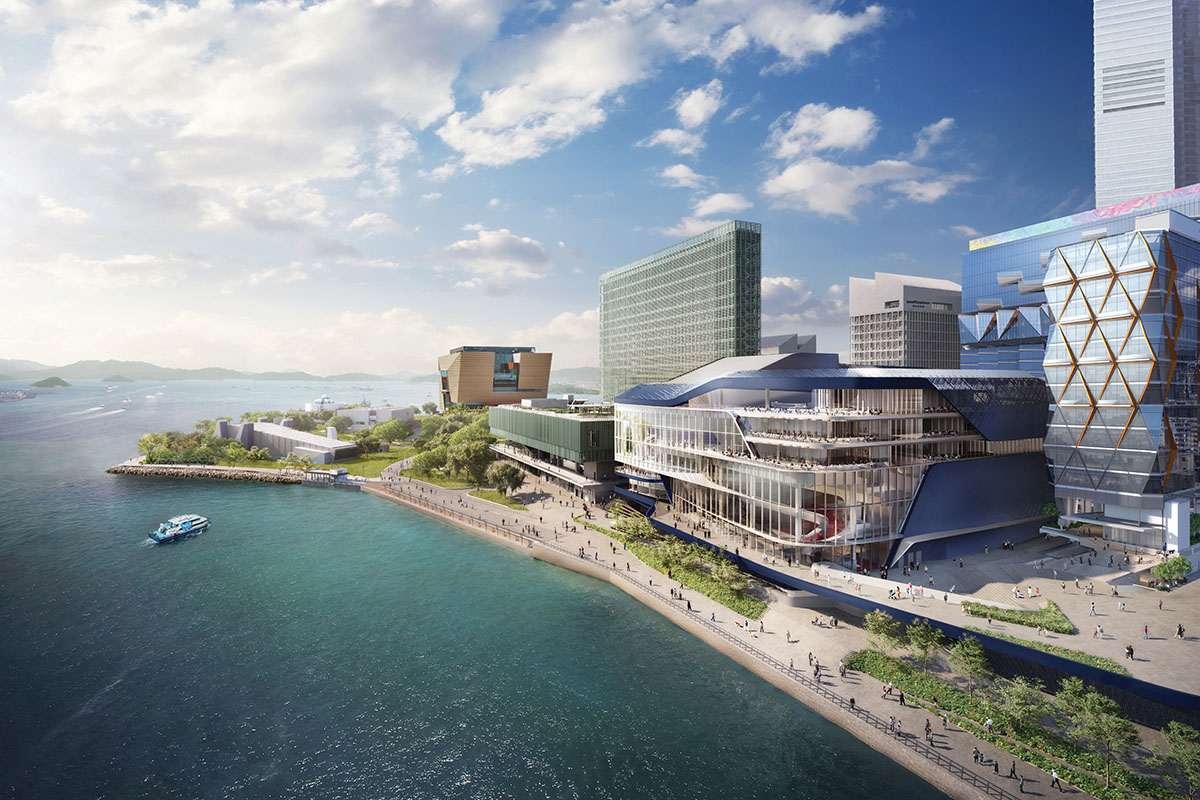
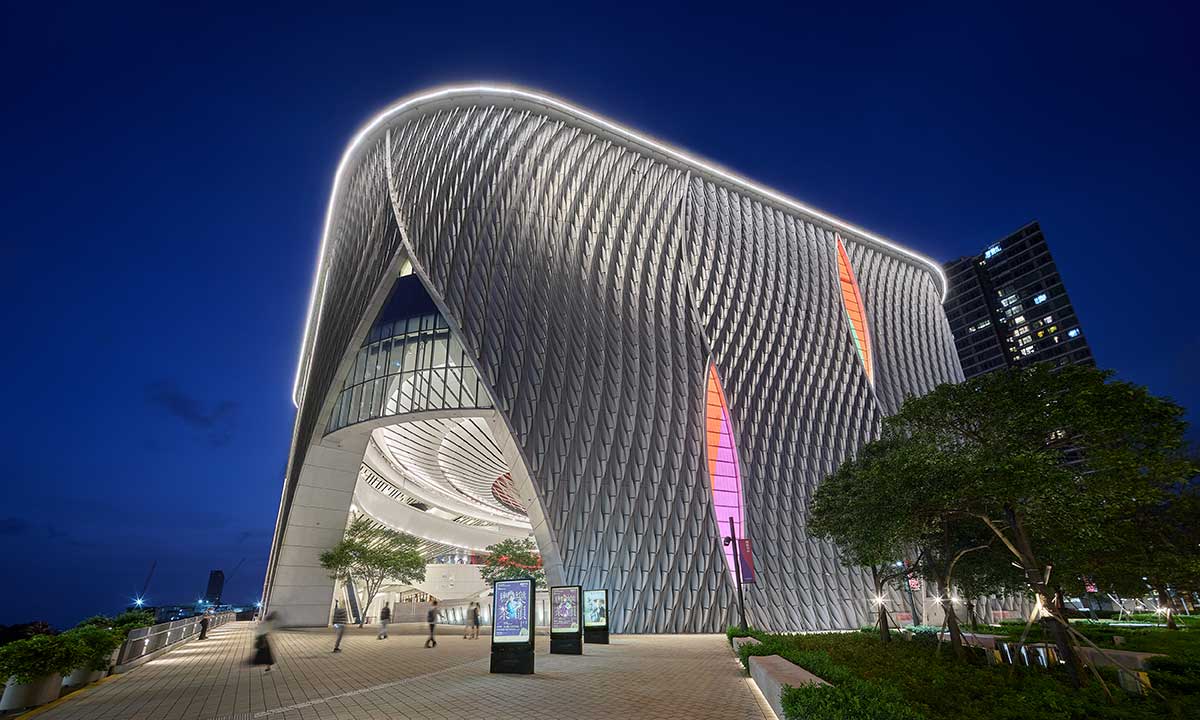
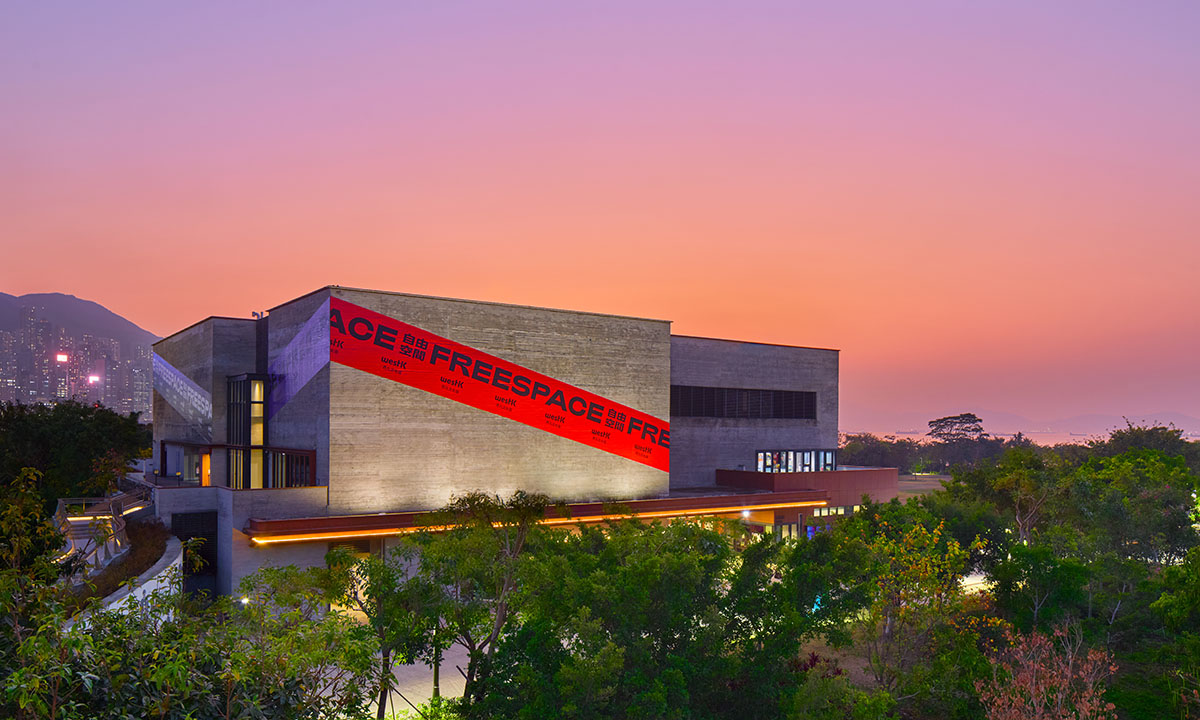
WestK already contains two museums, M+ and the Hong Kong Palace Museum, as well as the Xiqu Centre, which is dedicated to Chinese opera, and Freespace, a venue for contemporary performance. The upcoming WestK Performing Arts Centre (WestK PAC), designed principally for premier theatre and dance and musical performances, will be the newest flagship cultural landmark of Hong Kong and Asia when it opens in 2027.
The park and waterfront connect these institutions. They also bring people into the district who might never have planned a visit to a museum or theatre. Tam sees an opportunity to introduce them to performances in less formal surroundings, including outdoor dance on the harbourfront.
‘Back in the old days, when I first broke into the business, it was about people coming to you to hear you play, to see you dance,’ he says. ‘But the 21st century is about how you bring your arts to the people.’
The London architects Foster + Partners, whose work in Hong Kong includes the airport passenger terminal, developed WestK’s City Park master plan. It gives the principal cultural buildings distinct identities and sets them among public spaces intended for everyday use. Tam regards the park as central to the plan: people can spend time among the arts without first buying a ticket.
A cultural identity for Hong Kong
Tam traces WestK’s origins to two needs. Hong Kong’s arts organisations wanted better facilities in which to grow. The city also wanted its international reputation to encompass arts and culture as well as finance and commerce.
The latter aim now runs through government policy. Hong Kong’s Blueprint for Arts and Culture and Creative Industries Development, published in 2024, includes measures to increase cultural participation, support creative industries and strengthen international exchange. It also sets out a 10-year programme for arts and cultural facilities. WestK is one of the largest projects within that wider effort.
Tam believes that bringing several institutions together gives WestK an advantage. Each venue has its own programme, but visitors can move between them and use the park and waterfront along the way. That combination encourages people to return, perhaps for an art form they did not originally come to see.
‘How can we make arts and culture relatable?’ he asks. People should be able to encounter them in the course of an ordinary visit to the district.
WestK Performing Arts’s programme spans xiqu, dance, music, alongside learning and participation programmes. Its museums bring contemporary visual art and Chinese cultural heritage into the same area. Tam is particularly interested in what the presence of Chinese opera adds to the mix.
Is WestK unique?
Asked whether there are comparable projects elsewhere, Tam looks to the Middle East. Cities in Saudi Arabia, Qatar and the United Arab Emirates are developing new museums, theatres and cultural areas. The institutions are not necessarily grouped as closely as WestK’s, but Tam recognises a shared ambition to make culture prominent in the development of a city.
He and his WestK colleagues visited cultural projects in the region to explore potential relationships. Tam was struck by young curators and arts professionals who had studied or worked in cities such as London, New York, Sydney and Melbourne before returning home to help establish new institutions.
One conversation, with a young museum director in Riyadh, stayed with him. She spoke about using her work to help build her country’s cultural identity. Tam recognised something of Hong Kong’s ambition in her account.
He distinguishes the region’s long cultural histories from the relative newness of some institutions presenting Western art forms. What interested him most was the commitment of the people building those institutions, and the possibilities for working with them.
Giving artists room to grow
Tam returned to Hong Kong from Toronto in 1996, having trained as a pianist and composer. He began work in music education with the Hong Kong Philharmonic Orchestra, known as the HKPhil, and later spent about 11 years with the orchestra across two periods, separated by a move to the Kennedy Center in Washington.
He remembers what the HKPhil could achieve on stage at the Hong Kong Cultural Centre. Behind the scenes, musicians needed more rehearsal rooms, storage for large instruments and places to meet and exchange ideas.
His subsequent experience with Hong Kong Ballet where he had once been the Executive Director from 2014 to 2020 revealed different requirements: showers, physiotherapy space and facilities that support dancers’ physical wellbeing. Tam praises the Cultural Centre’s staff for doing all they could to help. The building had been designed for multiple purposes, however, and its resident companies’ needs had grown.
‘A great venue needs to have so much more than just a good stage,’ he says.
Tam likens an arts organisation that has outgrown its venue to a turtle needing a larger shell. When consultants asked Hong Kong’s arts groups what they wanted from WestK, he was encouraged that they discussed backstage facilities as well as auditoriums.
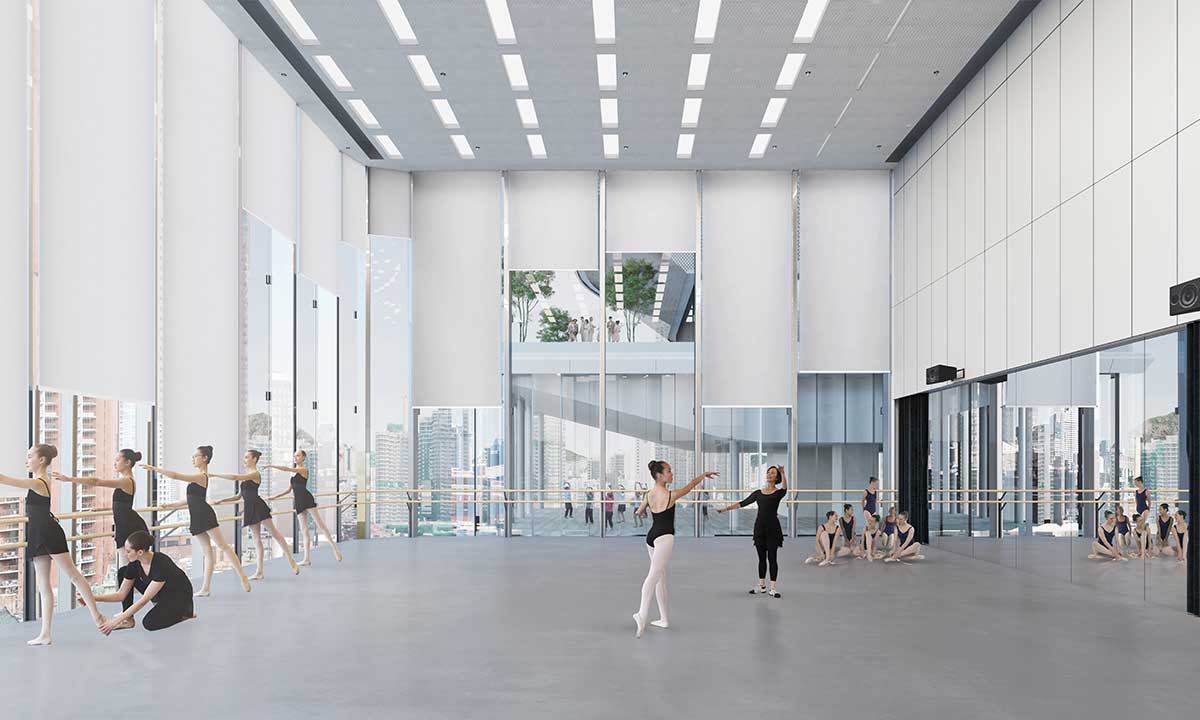
The forthcoming WestK Performing Arts Centre gives WestK a chance to address some of those needs. Hong Kong Ballet is set to become its first resident company and strategic cultural partner of WestK Performing Arts. This strategic partnership reflects a shared commitment to driving artistic creation, talent cultivation, audience engagement, and strengthening the development of Hong Kong’s performing arts sector. Tam looks forward to its performances, but is also enthusiastic about its training and community work, including Silver Ballet for older participants.
He and his colleagues at the Hong Kong Ballet are already discussing how the residency could reach into the district’s studios and public spaces.
Taking the fear out of unfamiliar art
Tam knows that putting an art form in front of people does not mean they will immediately enjoy it. He remembers speaking to the head of a major opera house who had attended a Peking opera performance in Europe. After about ten minutes, she left: its sound was so unfamiliar that she could not settle into the experience.
Tam tells the story with humour. It also illustrates a problem for arts educators. Even someone immersed in the performing arts can struggle with a tradition she does not know. A new audience may need some help before deciding whether it is for them.
Western opera has its own barriers. Tam recalls a conversation about its reception in the United States: for an audience accustomed to hearing performances in English, spending three or four hours watching a drama sung in an unfamiliar language can be a formidable first step. The conventions of a formal theatre visit may add to the discomfort.
He and Hong Kong Ballet colleagues are considering an outdoor dance day on WestK’s waterfront. Passers-by could stop to watch without buying a ticket or knowing anything about the work beforehand. The harbour would provide the backdrop, and visitors could stay for a few minutes or for the whole performance.
Tam’s background in education informs the approach. A child who attends an arts workshop may never buy a ticket from the organisation that provided it. They may nevertheless develop an interest in music or dance that stays with them. Tam sees that as valuable, while recognising that live performance also depends on finding future audiences.
WestK’s museums and its performing arts division, WestK Performing Arts, each have learning and participation teams. Their programmes reach different ages and travel beyond the district into other parts of Hong Kong.
Tam describes a student matinee that introduces pupils to Chinese opera through short excerpts, instrumental music and narration, inside the Tea House Theatre of the Xiqu Centre. The format helps them follow the stories before they encounter a full production. He says thousands of pupils have attended over the past six years.
The team talks to teachers and Hong Kong Education Bureau officials about the curriculum and what interests pupils. Teachers have limited time to prepare new arts material, so WestK Performing Arts aims to offer a programme they can readily use.
Tam worries about giving children an experience they dislike so much that they will not try again. The matinee gives them some understanding of the form and a chance to become curious about it.
Hong Kong on the international arts circuit
WestK is hosting the Association of Asia Pacific Performing Arts Centres’ 2026 Hong Kong Conference from 6 to 9 October. This year’s AAPPAC event is particularly momentous, as it marks both the 30th anniversary of the Association and the first time WestK has hosted the conference. The Hong Kong Performing Arts Expo (HKPAX), follows from 9 to 13 October, with WestK Performing Arts programmes among its partner events. Tam has also moderated an AAPPAC discussion on building and adapting performing arts spaces.
This October, HKPAX will bring around 1,600 registered attendees to Hong Kong from the international performing arts sector. Alongside the AAPPAC conference, it gives artists and presenters opportunities to see Hong Kong productions, meet potential collaborators and discuss where work might travel next. For WestK, the two gatherings place its venues and artists within the international network of performing arts centres that Tam is helping to develop.
Audiences from mainland China are also becoming increasingly important to WestK. Tam says the proportion of visitors from the mainland is rising at both museums and at performing arts events. For a production, those visitors can make a longer run possible.
He points to The Impossible Trial, the first original Cantonese musical commissioned by WestK Performing Arts and co-produced with Hong Kong Repertory Theatre, which premiered in 2022 and returned for subsequent Hong Kong runs. It played 30 performances in Hong Kong at WestK’s Xiqu Centre in 2025. Based on ticket buyers’ phone numbers, Tam says over 50% of that run’s audience came from mainland China, predominantly the Greater Bay Area.
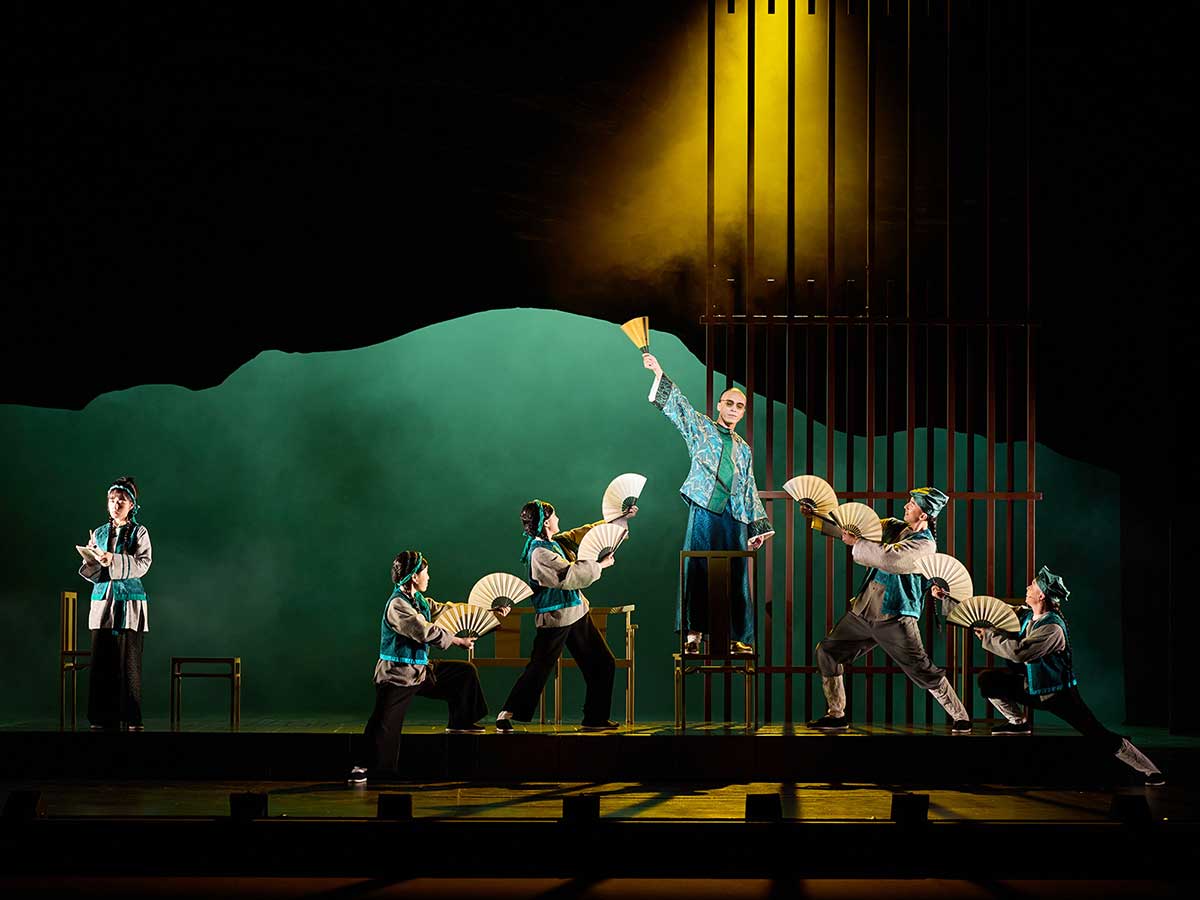
Without those visitors, he estimates, WestK might have staged around 20 performances. The additional shows helped the production move into profit, leaving money to reinvest.
‘Long runs are the lifeline for performing arts,’ he says.
Tam wants WestK to develop new audiences in Hong Kong while drawing more people from the Greater Bay Area and further afield. The first requires years of education and engagement. The second can give a successful production a longer life and provide income for the next one.
Paying for the district
Tam puts the WestK’s WKCDA’s annual running costs at roughly HK$1.5 billion to HK$1.6 billion, or approximately US$190 million to US$205 million. The Hong Kong government provided a one-off HK$21.6 billion endowment, approximately US$2.8 billion, for its development in 2008. WestK was nevertheless designed to meet its annual operating costs without a continuing government subvention.
Tam says ticket sales, sponsorship and venue hire cannot meet the bill. WestK therefore draws on the commercial potential of land within the district.
In 2016, the government gave the WKCDA the right to develop sites designated for hotels, offices and housing. Under the original plan, WestK would make agreements with private developers to build and operate properties for a fixed term. The developers would pay an upfront sum, and WestK would receive a share of rental income during the operating period. At the end of a build, operate and transfer agreement, control of the development would revert to the Authority under the terms agreed with the government. The income was intended to help fund the district’s cultural facilities.
The problem is the wait. Museums and venues have opened and need funding every year, while some commercial sites have yet to be developed and produce income.
In 2024, the government changed one part of the arrangement. Residential development in a section of WestK no longer has to follow only the build, operate and transfer model; units there may be sold. Officials said the change would address the WKCDA’s cash-flow problem and support about ten further years of operation while it develops longer-term income.
Sponsorship remains useful for individual programmes and productions, but Tam does not think it can carry a district of this size. He also recognises that artistic aims and commercial requirements can pull in different directions. A partnership may bring essential resources while placing demands on how a project is presented. Tam says some things can be adjusted without changing the artistic result. Others cannot.
‘How can you protect the arts without sacrificing the artistic integrity,’ he asks, ‘but yet still get enough resources [and] support?’
The pressure is not peculiar to WestK. Tam recently visited the Munch Museum in Oslo, where colleagues told him their funding was being cut as Norway increased defence spending in response to the war in Ukraine and its proximity to Russia. Even in a wealthy country with substantial public resources, he found arts institutions facing difficult financial choices.
What WestK must sustain
WestK plans programmes and budgets three years at a time, though Tam says major projects require a view extending five years or more. Once the WestK Performing Arts Centre opens, the district will need time to establish it within its programme. A music centre and other venues remain in the longer-term plan.
Tam knows that new buildings alone will not settle the questions facing WestK. His years with the HKPhil and Hong Kong Ballet taught him that artists’ needs change as companies develop. The district must also keep bringing people to work they have never considered seeing, while meeting the costs of the institutions it has created.
The Impossible Trial shows how those aims can reinforce one another. Visitors from beyond Hong Kong made a longer run viable, giving audiences more opportunities to see the production and its makers income to invest again. The student matinee works over a different timescale, introducing children to Chinese opera without expecting an immediate return.
Tam wants a district capable of both. Its venues need to serve artists properly; its public spaces need to welcome people who have no ticket; and its finances need to allow the work to continue. WestK’s next centre will add another stage to the harbourfront. What happens across the whole district, and who chooses to come back, will matter more.
Paul Tam
Paul Tam has served as Executive Director, Performing Arts, at the West Kowloon Cultural District Authority in Hong Kong since March 2020.
In his role, Paul leads the Performing Arts Division, which oversees two flagship venues – the Xiqu Centre and Freespace – and is guiding the development of the WestK Performing Arts Centre, scheduled to open in 2027. He is responsible for shaping the Division’s strategic vision and sustainable growth, directing its artistic, programming, operational, financial, fundraising and business affairs. The Division’s portfolio embraces an extraordinary range of disciplines, from Chinese opera, theatre and dance to music and community learning initiatives.
Before joining WestK, Paul built a distinguished career in the performing arts, spanning symphony, ballet and literary organisations. His professional career has spanned from Toronto and Washington D.C. to Hong Kong, where he has held leadership roles including Executive Director of the Hong Kong Ballet and General Manager of the Hong Kong International Literary Festival.
Paul currently serves as a Director of the International Society for the Performing Arts (ISPA), a Board Member and former Chairman of the Hong Kong Arts Administrators Association (HKAAA), a Governor of the Federation for Asian Cultural Promotion (FACP), and an Advisor to Our Hong Kong Foundation (OHKF).